Did you play any new board or card games over Christmas?
How did you learn how to play?
Are you strategic and tactical?
Are there unwritten variations?
Is there a rule breaker in the room?
This is exactly how most organisational processes behave in the real world.
At first, it is all about the rules. What can you do? What can’t you do? What happens if two things are in conflict? Only once the basics are clear do people start spotting patterns, shortcuts, and strategies. And, inevitably, someone tests the boundaries, either by “creative interpretation” of the rules or by quietly ignoring one they don’t like.In theory, services and processes are designed rationally: clear steps, defined roles, agreed outcomes. In practice, colleagues experience them more like a game they were never properly taught.
- Some people only know part of the rules.
- Others have learned local variations that “work round here”.
- A few have developed highly effective tactics to get things done despite the process.
- And occasionally, there is outright non-compliance—not through malice, but because the game feels unwinnable if played as written.
Traditional process reviews often miss this reality. They document the official rules, not the game people are actually playing day to day.
Why Game of Homes works for service design
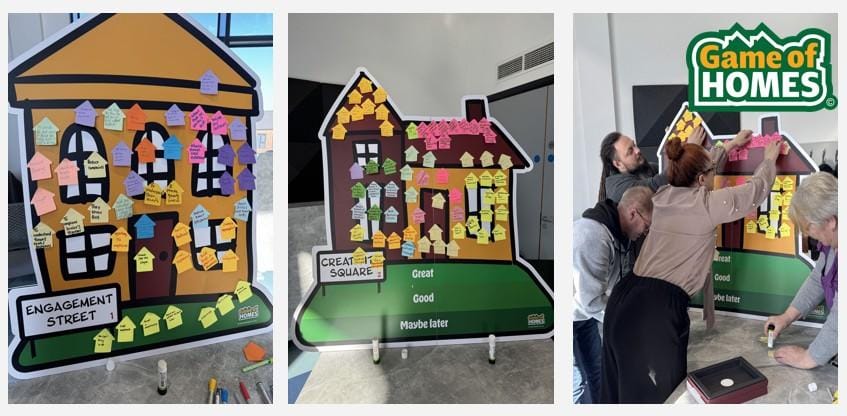
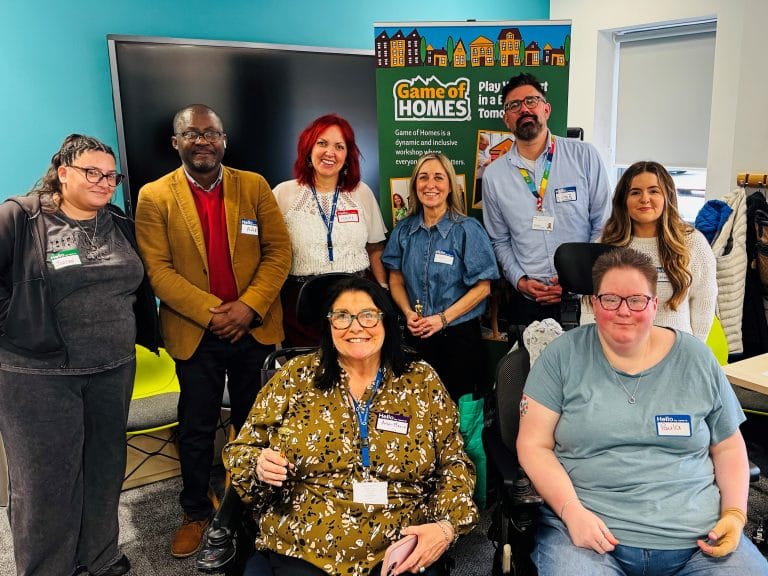
This is where Game of Homes (GoH) becomes a powerful service design and process review tool.Rather than starting with flowcharts and policy documents, GoH creates a safe, structured space where participants can play the process together. It surfaces lived experience quickly and honestly, without the defensiveness that formal reviews can trigger. Using the board-game analogy, GoH helps organisations explore four critical dimensions of service design.
1. Understanding the rules – Do people genuinely understand the process? Where are the points of confusion, ambiguity, or overload? If different teams describe the “same” rule in different ways, that is a design flaw, not a training issue.
2. Variations and exceptions – Every service has exceptions. The problem arises when exceptions quietly become the norm. GoH makes these visible, allowing teams to ask whether variations are justified, accidental, or compensating for a broken rule elsewhere.
3. Tactics and strategies – People are resourceful. They invent workarounds to meet customer needs, hit targets, or reduce friction. GoH captures these informal tactics and treats them as valuable intelligence, often pointing directly to where the process should be redesigned.
4. Non-compliance – When rules are routinely bypassed, it is rarely because people are reckless. More often, the process conflicts with reality. GoH enables open discussion about why compliance breaks down and what would make the “right” behaviour the easiest behaviour.
From playing the game to redesigning it
The real value of GoH in service design is that it shifts the conversation. Instead of asking, “Why aren’t people following the process?”, it asks, “What game have we actually designed, and is it fair, playable, and worth winning?”Like any good board game, a well-designed service should have:
- Clear and simple rules
- Enough flexibility to handle real-world situations
- Incentives aligned with the outcomes you want
- Shared understanding of how to play well
Game of Homes does not just help organisations understand their processes. It helps them redesign the game so that colleagues and customers can succeed—without needing to bend the rules to do the right thing. At Game of Homes we value in-depth process review and reengineering along with service design and customer journey mapping. But sometimes all you need is a half-day seriously fun meeting to sort it out! Do not pass, GOH!