How Gamification is Reshaping Tenant Engagement in Social Housing
Tenant engagement is a cornerstone of good governance in social housing, and transparency, influence and accountability are essential elements.
Often traditional approaches fall short. Public meetings and consultation exercises can attract only a small, already-engaged minority. Technical language and formal processes may unintentionally exclude those with different literacy levels, limited time, or low confidence. Power imbalances can discourage open dialogue, and feedback can be gathered without leading to tangible change. These barriers make it harder to reach underrepresented voices or facilitate meaningful scrutiny of services.
Gamification, which refers to the application of game-like elements, such as leaderboards, point scoring, and rewards, into non-game contexts, is a growing trend in service design, co-production, and participatory engagement across a wide range of sectors.
Recent studies have highlighted impressive results in areas such as gathering feedback from hard-to-reach groups, improving active participation amongst stakeholders and behavioural change in key areas, such as reductions in household energy use.
Why Gamification Works
Gamification works because it taps into the fundamental ways people are motivated to engage, learn and collaborate. By incorporating elements such as challenges, feedback, and rewards, it transforms otherwise routine or complex processes into experiences that feel purposeful and rewarding. Games create a safe space where participants can experiment, test ideas, and make decisions without the real-world risks. This encourages creative thinking and problem-solving.
Gamification addresses these issues by allowing individuals of different backgrounds, confidence levels, or expertise to participate equally. Tenants and professionals can explore difficult issues together in an environment that fosters curiosity, shared ownership, and a genuine sense of achievement.
Leading the Way
One pioneer of gamification in the social housing sector is Game of Homes, a collaborative venture developed by two specialist social housing consultancies, Golden Marzipan and Tentacles Consultancy. In partnership with Sheffield Hallam University’s knowledge exchange design team, Design Futures, Game of Homes developed an innovative game that is helping to rethink tenant engagement within social housing communities.
Game of Homes combines gameplay with structured problem-solving to empower tenants, colleagues, and even communities to address policy changes, contribute to service improvement planning, and strengthen tenant-led scrutiny frameworks.
"Too often, tenant engagement struggles to spark real dialogue - people are either overwhelmed by the complexity or unsure how to contribute,” explains Steve Dungworth, Director of Games of Homes. “By using game mechanics to create a shared, safe space, everyone can explore challenges together, test ideas, and build solutions that stick. The most powerful outcomes come when participants leave with actions they’ve co-created, not just opinions."
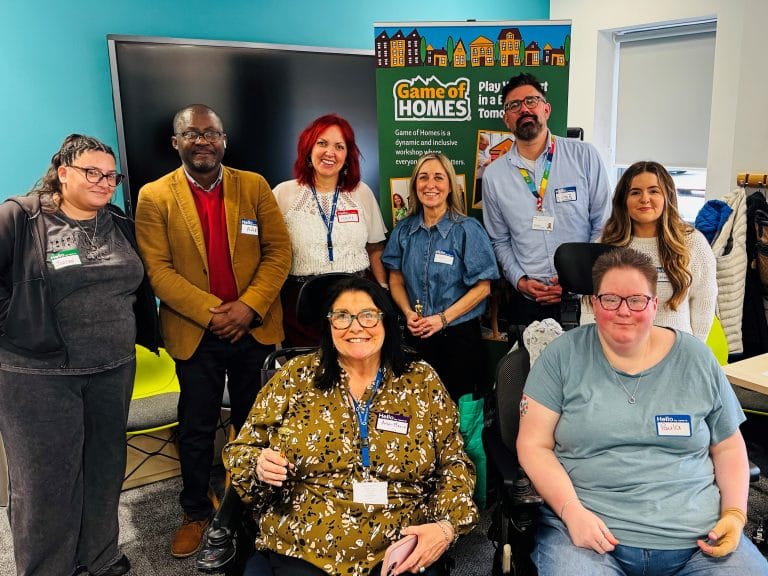
Facilitated by accredited experts, each Game of Homes session can be played by 6-16 people and combines structured gameplay with a collaborative workshop approach. The board game’s route is designed to extract different views and information, all in an effort to address real-life challenges, fostering a sense of belonging and community.
"Gamified workshops are an equaliser”, adds Claire Blacka, also a Director of Game of Homes. “Regardless of experience or confidence, everyone finds a voice. Over the course of a session, you can watch ideas take shape, gain momentum, and evolve into practical actions that participants feel ownership over."
As social housing providers look for ways to strengthen trust, inclusion, and shared problem-solving, gamification offers a practical, scalable tool to bring communities into the heart of decision-making.